PCOS Blood Test in Great Yarmouth: Hormonal Testing for Polycystic Ovary Syndrome

Table of Contents
Written for Pharmacyexprezz & Pivate Clinic: Reviewed by Waheedat Owodeyi. Superintedent Pharmacist. General Pharmaceutical Council Registraion Number 2065550..
Looking for a PCOS blood test in Great Yarmouth? Polycystic ovary syndrome (PCOS) now known as Polyendocrine Metabolic Ovarian Syndrome (PMOS) is a common hormonal condition that can affect periods, fertility, skin, hair and metabolism. Blood tests form an important part of the investigation, although they are only one piece of the diagnostic picture.
At Pharmacyexprezz we offer private hormonal testing that can support the assessment of possible PCOS, with no GP referral required.
What is PCOS?
PCOS is a hormonal condition that affects how the ovaries work. It is linked to higher levels of androgens (sometimes called “male” hormones), irregular or absent ovulation, and in many cases the appearance of multiple small follicles on the ovaries.
Common features include irregular or infrequent periods, excess facial or body hair, acne, difficulty managing weight, and challenges with fertility. Not every person with PCOS has all of these symptoms, and the condition can look different from one person to another.
What is a PCOS Blood Test?
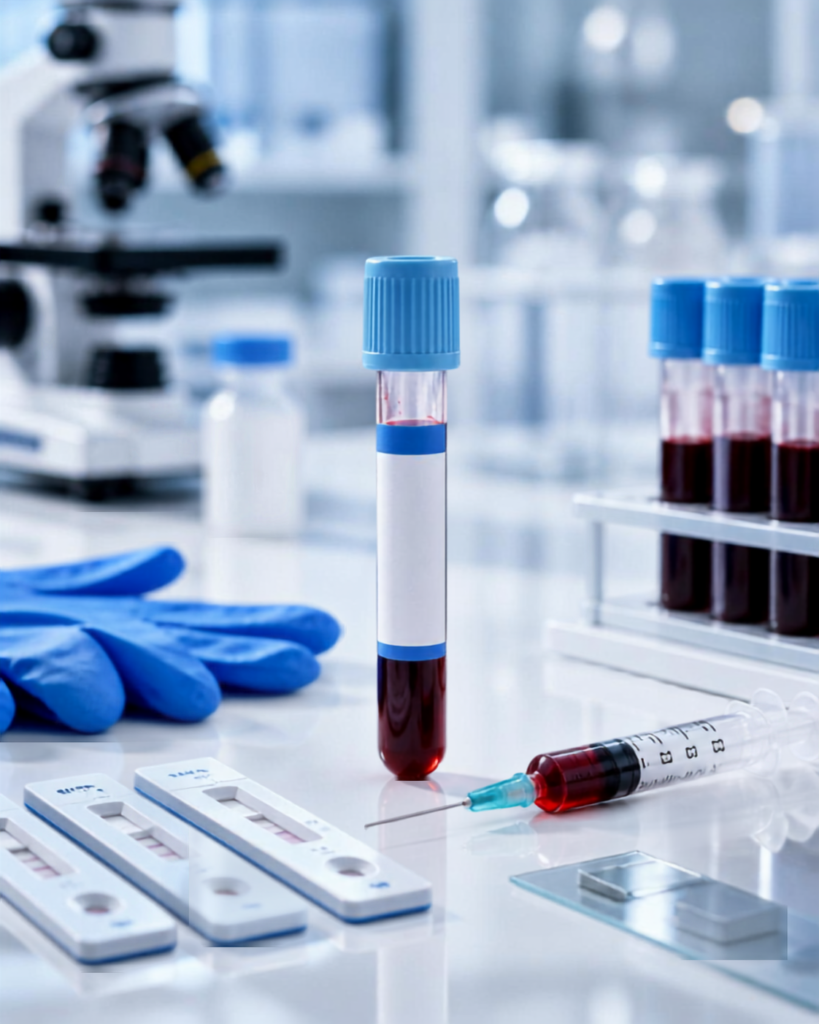
A PCOS blood test is not a single marker. It is a group of hormone and related blood tests used to look for patterns associated with PCOS and to help rule out other conditions that can cause similar symptoms.
Typical panels check androgen levels, reproductive hormones, thyroid function and sometimes metabolic markers such as glucose or insulin-related indicators.
Why might you need blood tests for PCOS?
A hormone or PCOS blood test may be helpful if you are experiencing any of the following:
- Irregular, infrequent or absent periods
- Excess facial or body hair, persistent acne or hair thinning
- Difficulty conceiving
- Symptoms that could also be caused by thyroid problems or other hormone imbalances
- A family history of PCOS or type 2 diabetes
Testing helps build a clearer picture and can exclude other treatable causes of your symptoms.
What Hormones Can Be Checked?
A Typical PCOS-Related Blood Panel May Include:
- Testosterone (total) & SHBG (sex hormone-binding globulin) to calculate the free androgen index
- LH & FSH (Luteinising Hormone and Follicle-Stimulating Hormone)
- Prolactin
- TSH (thyroid function)
- AMH (anti-Müllerian hormone) in selected cases
- Additional androgens such as androstenedione or DHEAS
- Metabolic markers (glucose, lipids or insulin-related tests)
Can a Blood Test Diagnose PCOS?
No single blood test can diagnose PCOS on its own.
Diagnosis is based on the Rotterdam criteria, which require two out of three of the following (after other causes have been excluded):
- Irregular or absent ovulation (usually reflected in cycle history)
- Clinical or biochemical signs of high androgens
- Polycystic ovarian appearance on ultrasound or a raised AMH level (in adults)
Blood tests help assess the androgen and hormone picture and rule out other conditions (such as thyroid disease or raised prolactin). They support the diagnosis but do not replace clinical assessment and, where needed, ultrasound.
What Other Tests Might Be Needed?
Further Investigations
Depending on your symptoms and initial results, additional tests may include:
- Pelvic Ultrasound: Used to examine the ovaries for cysts or structural changes.
- Additional Hormone Tests: To exclude other conditions with similar symptoms.
- Metabolic Checks: Glucose, cholesterol, or HbA1c screening, as PCOS is linked to a higher long-term risk of type 2 diabetes and cardiovascular issues.
When Should PCOS Blood Tests be Done?
Some hormone tests are best timed to the early part of the menstrual cycle (usually days 2–5). Others, such as AMH, can be done on any day.
If you are taking hormonal contraception, some androgen measurements are less reliable. In certain cases the clinician may advise stopping the pill for a period before testing (with alternative contraception if needed). Always discuss this before stopping any medication.
Do You Need to Fast?
It depends on the exact panel. Pure hormone tests often do not require fasting. If glucose, insulin or certain metabolic markers are included, fasting may be requested. You will be given clear instructions when you book at Pharmacyexprezz.
What happens at a PCOS blood test appointment?
The Process at PharmacyExprezz
A simple, transparent approach to your testing:
How Long Do PCOS Blood Test Results Take?
Most laboratory hormone panels return results within 48-72 hours. Exact timing depends on the specific markers requested. You will be told the expected turnaround when you book.
What Happens If Your Results are Abnormal?
An abnormal result does not automatically mean you have PCOS. Raised androgens, an altered LH:FSH ratio or other changes need to be interpreted alongside your symptoms and cycle history.
If results suggest further investigation is needed, the team at Pharmacyexprezz can discuss the findings with you and advise on next steps, which may include referral or additional testing.
PCOS Blood Testing in Great Yarmouth
Pharmacyexprezz provides private PCOS blood testing in Great Yarmouth with no GP referral required. Our PCOS investigation panel and related hormone profiles can help explore possible hormonal patterns associated with the condition.
Frequently Asked Questions
Common questions about PCOS testing and what your results mean.
Can I have a PCOS blood test if my periods are regular?
Yes. Some people with PCOS have regular cycles but still show other features such as high androgens or polycystic ovarian morphology.
Does a high AMH level mean I have PCOS?
A raised AMH can support the diagnosis in adults when other criteria are present, but AMH alone is not enough to diagnose PCOS.
Do I need an ultrasound as well as blood tests?
Not always. If you already meet two of the three diagnostic criteria (for example irregular cycles plus clinical hyperandrogenism), ultrasound or AMH may not be required. Your clinician will advise.
Is the test available without a GP referral?
Yes. Private PCOS-related blood testing is available directly at PharmacyExprezz.
Will the results tell me about my fertility?
Hormone results can give useful information about ovulation and ovarian reserve, but they do not predict fertility on their own. A broader clinical assessment is needed for fertility concerns.
AMH PCOS, androgen test, hormone blood test, irregular periods blood test, PCOS blood test, PCOS blood test Great Yarmouth, PCOS investigation, pharmacyexprezz, polycystic ovary syndrome, private PCOS test