HbA1c Test in Great Yarmouth: Diabetes Testing Explained

Table of Contents
Written for Pharmacyexprezz & Pivate Clinic: Reviewed by Waheedat Owodeyi. Superintedent Pharmacist. General Pharmaceutical Council Registraion Number 2065550..
An HbA1c test is a blood test that provides an indication of your average blood glucose level over the previous two to three months. It is widely used when assessing blood sugar levels and can help identify patterns associated with type 2 diabetes and increased diabetes risk.
Unlike a standard blood glucose test, which measures your blood sugar at a particular point in time, HbA1c provides a longer-term picture. This makes it a useful test when someone wants to understand their average blood glucose level rather than a single reading.
If you are considering an HbA1c test in Great Yarmouth, understanding what the test measures and what the results can mean can help you make sense of your results.
Book Your Clinic Visit
Schedule your private HbA1c appointment in seconds via our portal.
Have Questions First?
Message our pharmacy team directly for quick assistance and support.
What Is an HbA1c Test?
HbA1c stands for glycated haemoglobin. Haemoglobin is a protein in red blood cells that carries oxygen around the body. When glucose is present in the bloodstream, some of it attaches to haemoglobin. The resulting glycated haemoglobin is known as HbA1c.
Because red blood cells typically remain in circulation for around two to three months, the HbA1c result provides an indication of your average blood glucose levels over that period. The test is usually reported in mmol/mol. You may also see older results expressed as a percentage.
What Does HbA1c Measure?
HbA1c measures the amount of glucose attached to haemoglobin in your red blood cells. The result provides an indication of your average blood glucose level over the preceding two to three months rather than showing what your blood sugar is at the exact moment the sample is taken. This makes HbA1c different from a finger-prick blood glucose test.
A finger-prick test provides a snapshot of your blood glucose at that particular time, while HbA1c gives a longer-term picture.
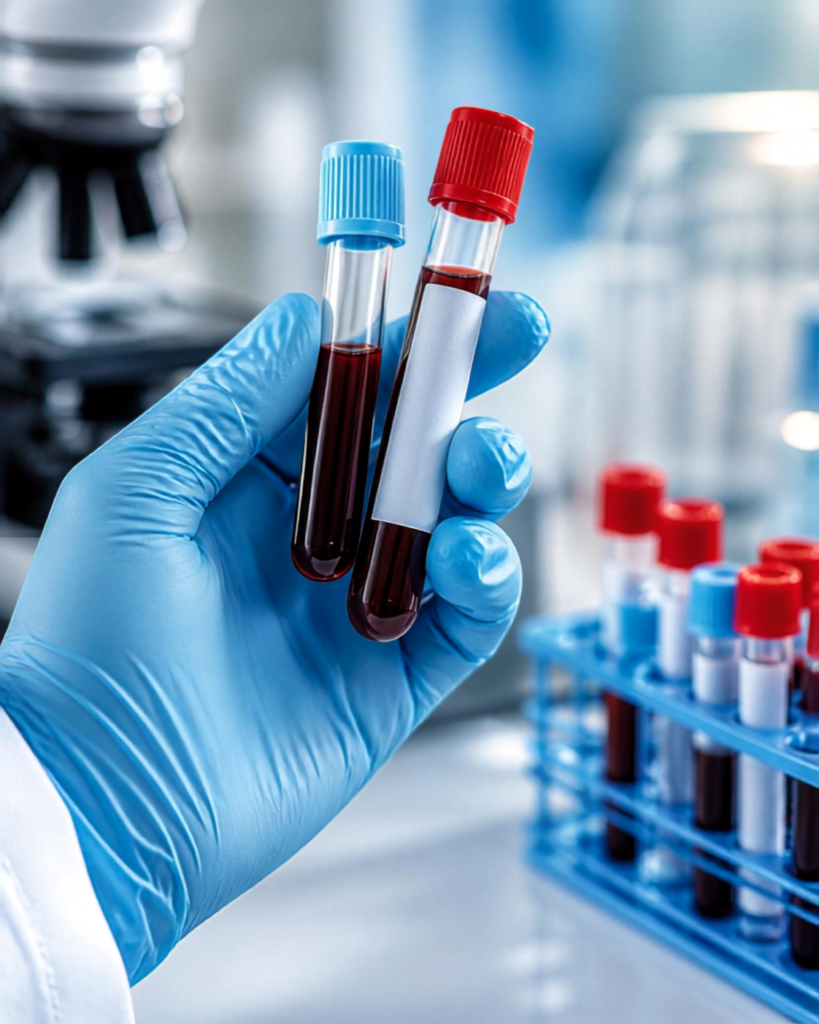
How Does an HbA1c Test Check for Diabetes?
HbA1c can be used as part of an assessment for type 2 diabetes. In UK clinical guidance, an HbA1c level of 48 mmol/mol (6.5%) or above is the diagnostic threshold for diabetes. However, the interpretation of a result depends on whether the person has symptoms and the circumstances in which the test was performed. In someone without symptoms, a diagnosis should not generally be made from a single elevated HbA1c result and confirmation may be required.
An HbA1c result between 42 and 47 mmol/mol (6.0–6.4%) is generally considered to indicate non-diabetic hyperglycaemia, meaning the person has a higher risk of developing type 2 diabetes. These figures are useful reference points, but an HbA1c result should not be interpreted in isolation.
What Do HbA1c Results Mean?
HbA1c results are commonly expressed in mmol/mol.
| HbA1c Result | General Interpretation |
|---|---|
| Below 42 mmol/mol | Below the threshold for non-diabetic hyperglycaemia |
| 42–47 mmol/mol | Non-diabetic hyperglycaemia / increased risk of type 2 diabetes |
| 48 mmol/mol or above | Diabetes range |
An HbA1c result in the diabetes range does not necessarily mean that a diagnosis can be made from that result alone. Where a person has no symptoms, a repeat or additional testing may be required to confirm the result.
If you already have diabetes, your target HbA1c may be different because targets can be individualised according to your circumstances and treatment.
Need an HbA1c Blood Test?
Fast private appointments available at Pharmacy Exprezz.
What Is the Difference Between HbA1c and a Blood Glucose Test?
Both tests provide information about blood sugar, but they measure it differently.
HbA1c Test
- Provides an indication of average blood glucose over the previous two to three months
- Is generally reported in mmol/mol
- Does not usually require fasting
- Can be used in the assessment and diagnosis of type 2 diabetes
Blood Glucose Test
- Measures glucose in the blood at a particular point in time
- Can be performed at different times depending on the type of test
- May require fasting for certain tests
- Can provide information about your blood glucose at that specific moment
Neither test should automatically be considered a substitute for the other. The most appropriate test depends on what is being investigated.
Who Might Consider an HbA1c Test?
An HbA1c test may be considered when someone wants to investigate their blood glucose levels or assess their risk of type 2 diabetes. It may be particularly relevant if there are risk factors or symptoms that warrant further assessment.
Risk is individual, however, and having one or more risk factors does not mean that you have diabetes.
If you have symptoms that concern you, discussing them with an appropriate healthcare professional is important rather than relying solely on a private blood test.
How Is an HbA1c Test Performed?
What to Expect During the HbA1c Test
How Long Do HbA1c Results Take?
The turnaround time depends on the testing method and whether the sample is analysed on site or sent to a laboratory. Some testing methods can provide results relatively quickly, while laboratory analysis may take longer.
If you are booking a private HbA1c test in Great Yarmouth, ask the provider about the expected turnaround time and how your results will be communicated.
What Can Affect an HbA1c Result?
HbA1c is useful, but it is not suitable for every situation. Conditions that affect red blood cells or haemoglobin can affect the accuracy or interpretation of an HbA1c result. These can include certain forms of anaemia and haemoglobin disorders.
Other factors may also need to be considered when interpreting the result. If you have a condition affecting your red blood cells or haemoglobin, tell the healthcare professional arranging or interpreting the test. An alternative form of glucose testing may sometimes be more appropriate.
When Should You Discuss Your Results With a Healthcare Professional?
A private HbA1c test can provide useful information, but the result should be considered alongside your symptoms, medical history and other relevant factors.
⚠️ Caution: Consult a Healthcare Professional If
Possible symptoms of diabetes can include increased thirst, frequent urination, unexplained weight loss, tiredness and blurred vision. These symptoms can have other causes, so they should be assessed appropriately rather than assuming that diabetes is responsible.
A private test can provide information, but it should not replace appropriate medical assessment where symptoms or abnormal results are present.
HbA1c Testing in Great Yarmouth
If you are looking for an HbA1c test in Great Yarmouth, private testing can provide a convenient way to obtain information about your average blood glucose levels. An HbA1c test can be useful when you want to understand your longer-term blood sugar levels or investigate whether your results fall within a range associated with increased diabetes risk.
Before booking, check what type of HbA1c test is being offered, how the sample will be analysed and how your results will be provided. If your result is abnormal or you have symptoms that concern you, discuss the findings with a qualified healthcare professional who can advise whether further testing or assessment is appropriate.
Frequently Asked Questions
What is an HbA1c test?
Does an HbA1c test require fasting?
What HbA1c level indicates diabetes?
What does an HbA1c of 42–47 mmol/mol mean?
Is HbA1c the same as a blood sugar test?
Can an HbA1c test diagnose diabetes?
Can I take an HbA1c test if I don’t have diabetes?
How often should HbA1c be tested?
What happens if my HbA1c result is high?
Can an HbA1c result be inaccurate?
Ready to Take Control of Your Health?
Book your HbA1c test online or speak directly with our team on WhatsApp.
blood sugar test, diabetes blood test, diabetes monitoring, diabetes screening, hba1c diabetes, hba1c test, hba1c test Great Yarmouth, pharmacyexprezz, prediabetes test, rapid hba1c