What Is Ferritin? Your Complete Guide to the Ferritin Blood Test

Table of Contents
Written for Pharmacyexprezz & Pivate Clinic: Reviewed by Waheedat Owodeyi. Superintedent Pharmacist. General Pharmaceutical Council Registraion Number 2065550..
If your doctor, or a symptom like tiredness or hair loss, has led you to ask “what is ferritin?”, you’re not alone — it’s one of the most searched blood test questions we see at Pharmacyexprezz. This guide brings together everything you need to know: what ferritin is, why it matters, what a ferritin blood test actually shows, and how it’s different from a standard iron test.
What Is Ferritin?
Ferritin is a protein found inside your cells that stores iron and releases it when your body needs it. Think of it as your body’s iron savings account: iron itself is used straight away (mainly to make haemoglobin, the part of red blood cells that carries oxygen around your body), while ferritin holds the reserve supply for when dietary intake falls short.
Because it reflects your stored iron rather than the iron currently circulating in your blood, a ferritin level gives a much more stable, long-term picture of your iron status than a same-day iron reading — which can swing depending on what you last ate.
Ready to check your iron levels?
Book a private blood test with Pharmacyexprezz and get your results without needing a GP referral.
Why Does Ferritin Matter?
Your ferritin level matters because both too little and too much can cause problems:
Low Ferritin
Indicates your iron reserves are running low before official anaemia sets in.
High Ferritin
Can signal iron overload (e.g. haemochromatosis) or active body inflammation.
This dual role is exactly why ferritin needs a little interpretation, and why it’s often tested alongside other markers rather than read in isolation.
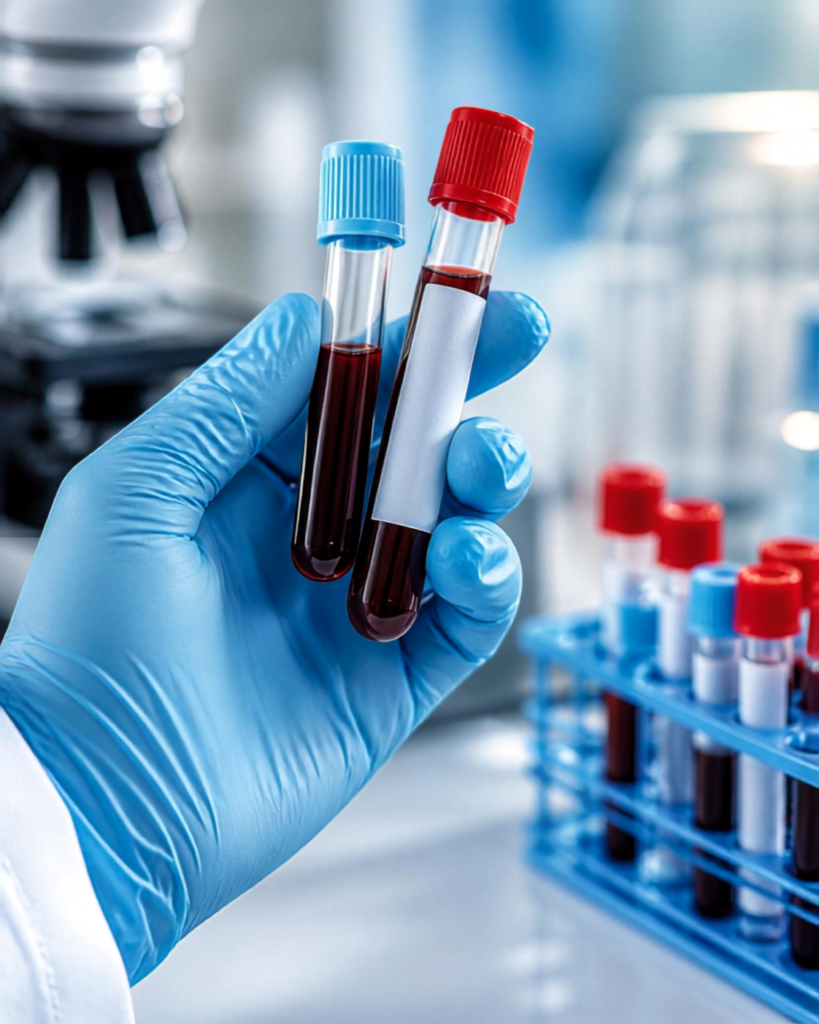
What Does a Ferritin Blood Test Show?
A ferritin blood test measures the concentration of ferritin in your blood, usually reported in micrograms per litre (µg/L or ng/mL). Your results will typically fall into one of three bands:
| Result | What it generally suggests |
|---|---|
| Low ferritin | Depleted iron stores — a common early sign of iron deficiency, even before anaemia shows up on a full blood count. |
| Normal ferritin | Iron stores are adequate for your body’s needs. |
| High ferritin | Could mean iron overload, but is just as often a sign of inflammation, infection, liver conditions, or heavy alcohol use — so it’s usually reviewed alongside your CRP and liver function. |
Reference ranges vary slightly between labs and between men and women, so it’s always worth reading your specific report rather than comparing to a generic online chart — our pharmacist can talk you through what your number means for you.
Who typically needs a ferritin test?
Anyone with unexplained fatigue, dizziness, weakness, or hair loss
Women of childbearing age — heavier periods increase iron loss
People following a vegetarian or vegan diet
Highly active individuals and endurance athletes
Anyone monitoring a known iron deficiency or iron overload condition
Anyone with unexplained fatigue, dizziness, weakness, or hair loss
Women of childbearing age — heavier periods increase iron loss
People following a vegetarian or vegan diet
Highly active individuals and endurance athletes
Anyone monitoring a known iron deficiency or iron overload condition
Ferritin vs Iron Test: What’s the Difference?
This is one of the most common follow-up questions we get, and it’s a fair one — both tests relate to iron, but they measure different things:
Serum Iron Test
Measures the iron that is actively circulating in your bloodstream, attached to a transport protein called transferrin. Levels can change depending on the time of day and what you have recently eaten.
Ferritin Test
Measures your stored iron reserves. It provides a steadier, longer-term indication of your body’s iron stores and is less affected by your most recent meal.
In short: serum iron is the iron currently in use; ferritin is the iron kept in reserve. Because of this, doctors and pharmacists often prefer ferritin as the more reliable first check when investigating possible iron deficiency, sometimes requesting both tests together for the fullest picture.
How Is the Ferritin Test Done?
The test itself is simple and takes only a few minutes:
Sample collection
A small blood sample is taken, either via a standard venous draw or a finger-prick test, depending on the service.
Laboratory analysis
The sample is sent to a laboratory for analysis.
Results
Results are typically available within a few working days.
No special preparation is usually required, though your pharmacist will confirm this when you book.
Book a Private Ferritin Test at Pharmacyexprezz
If you’re experiencing symptoms of low iron, want a health check, or simply want peace of mind, you can book a private ferritin test at Pharmacyexprezz in Great Yarmouth. Our friendly, qualified pharmacy team will talk you through your results and next steps — no long GP waits required.
Frequently Asked Questions
What is a ferritin test used for?
It’s mainly used to check the body’s iron reserves, helping to diagnose iron-deficiency anaemia, iron overload conditions such as haemochromatosis, or to monitor ongoing treatment for either.
Is ferritin the same as iron?
No. Ferritin is the protein that stores iron, while iron itself is the mineral your body uses. A ferritin test reflects your iron reserves rather than your circulating iron level.
What does high ferritin mean if my iron levels are normal?
This can point to inflammation, infection, or another underlying condition rather than an iron problem, since ferritin can rise as part of the body’s inflammatory response. Your pharmacist or GP may suggest additional tests, such as CRP, to clarify the cause.
How long does a ferritin blood test take to come back?
Results are typically available within 48/72 hours, although this can vary depending on the laboratory and testing option chosen.
Can I get a ferritin test without a GP referral?
Yes. Private ferritin testing is available directly through Pharmacy Exprezz without needing a GP appointment first.