
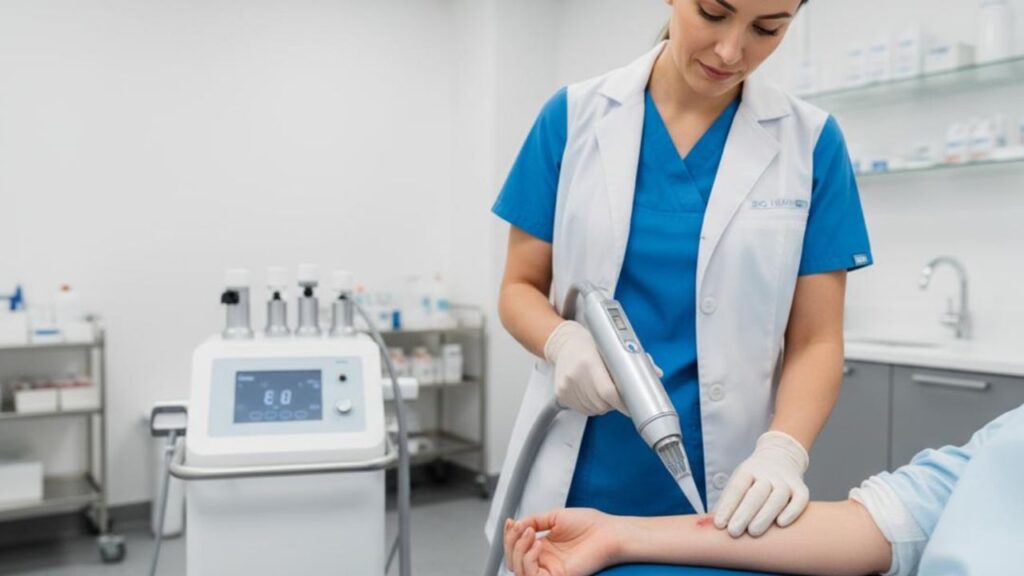
What is cryotherapy?
Cryotherapy is a common clinical treatment that uses extreme cold to freeze and destroy unwanted skin tissue. In skin clinics, this is often done using a controlled freezing method (commonly liquid nitrogen) applied directly to the lesion.
At Pharmacyexprezz, cryotherapy is offered for selected skin lesions, such as:
- Common warts
- Verrucas (plantar warts on the feet)
- Some skin tags (where clinically appropriate)
Suitability depends on the type of lesion, its location, your skin type, and your medical history.
How cryotherapy works for skin lesions
Cryotherapy works by rapidly freezing the lesion. The freezing process damages the abnormal tissue so your body can naturally clear it as the area heals.
After treatment, the area may:
- Look red and slightly swollen
- Form a blister (this can be normal)
- Develop a scab and then heal over time
Benefits of cryotherapy for warts and verrucas
Cryotherapy is popular because it can be:
- Quick (often completed in minutes)
- Targeted (treats the lesion without affecting large areas of skin)
- Effective for many people, especially when combined with good aftercare
- Suitable for hard-to-treat areas like the soles of the feet (verrucas), depending on assessment
What cryotherapy can treat (and what it can’t)
Cryotherapy may be suitable for:
- Common warts on hands and fingers
- Verrucas on the feet
- Some skin tags
Cryotherapy is not appropriate for every bump or mark. Some lesions need a different approach, referral, or further assessment.
If there’s any doubt about what the lesion is, it’s safer to assess first rather than treat.
What to expect at Pharmacyexprezz
A cryotherapy appointment at Pharmacyexprezz typically includes:
- Assessment
- We’ll look at the lesion and ask a few questions about how long it’s been there, any changes, symptoms, and previous treatments.
- Treatment
- The freezing is applied directly to the lesion for a controlled time.
- You may feel a sharp cold sensation, stinging, or a brief burning feeling.
- Aftercare advice
- You’ll get clear guidance on what’s normal, how to look after the area, and when to get in touch.
Does cryotherapy hurt?
It can be uncomfortable, especially for verrucas on weight-bearing areas of the foot. Most people find it manageable because the freezing time is short.
How many sessions will I need?
This varies. Some lesions respond after one session, while others need repeat treatments. The number of sessions depends on:
- Size and thickness of the wart/verruca
- Location (feet can be more stubborn)
- How long it’s been present
- Your immune response
Cryotherapy aftercare (warts, verrucas, skin tags)
After your appointment:
- Keep the area clean and dry
- If a blister forms, do not pop it
- Avoid picking at scabs
- Cover the area if it’s rubbing (especially on feet)
- Wash hands after touching the area to reduce spread (warts/verrucas can be contagious)
Seek advice if you notice increasing pain, spreading redness, pus, fever, or if you’re concerned about healing.
Risks and side effects
Possible side effects include:
- Redness, swelling, tenderness
- Blistering
- Temporary changes in skin colour (lighter or darker patches)
- Rarely, scarring or infection
Cryotherapy may not be suitable if you have certain circulation problems, reduced sensation, or conditions that affect healing. We’ll check suitability before treatment.
Why choose Pharmacyexprezz?
Patients choose Pharmacyexprezz for:
- A private consultation room
- Friendly, quick service with clear explanations
- Convenient access in Great Yarmouth, supporting patients across Norfolk communities
- A clinical, safety-first approach and straightforward aftercare guidance
Book cryotherapy at Pharmacyexprezz
If you’d like help with a wart, verruca, or skin tag, Pharmacyexprezz can advise whether cryotherapy is suitable and what results you can realistically expect.
Visit www.pharmacyexprezz.org.uk or call 01493 857888 to check availability.